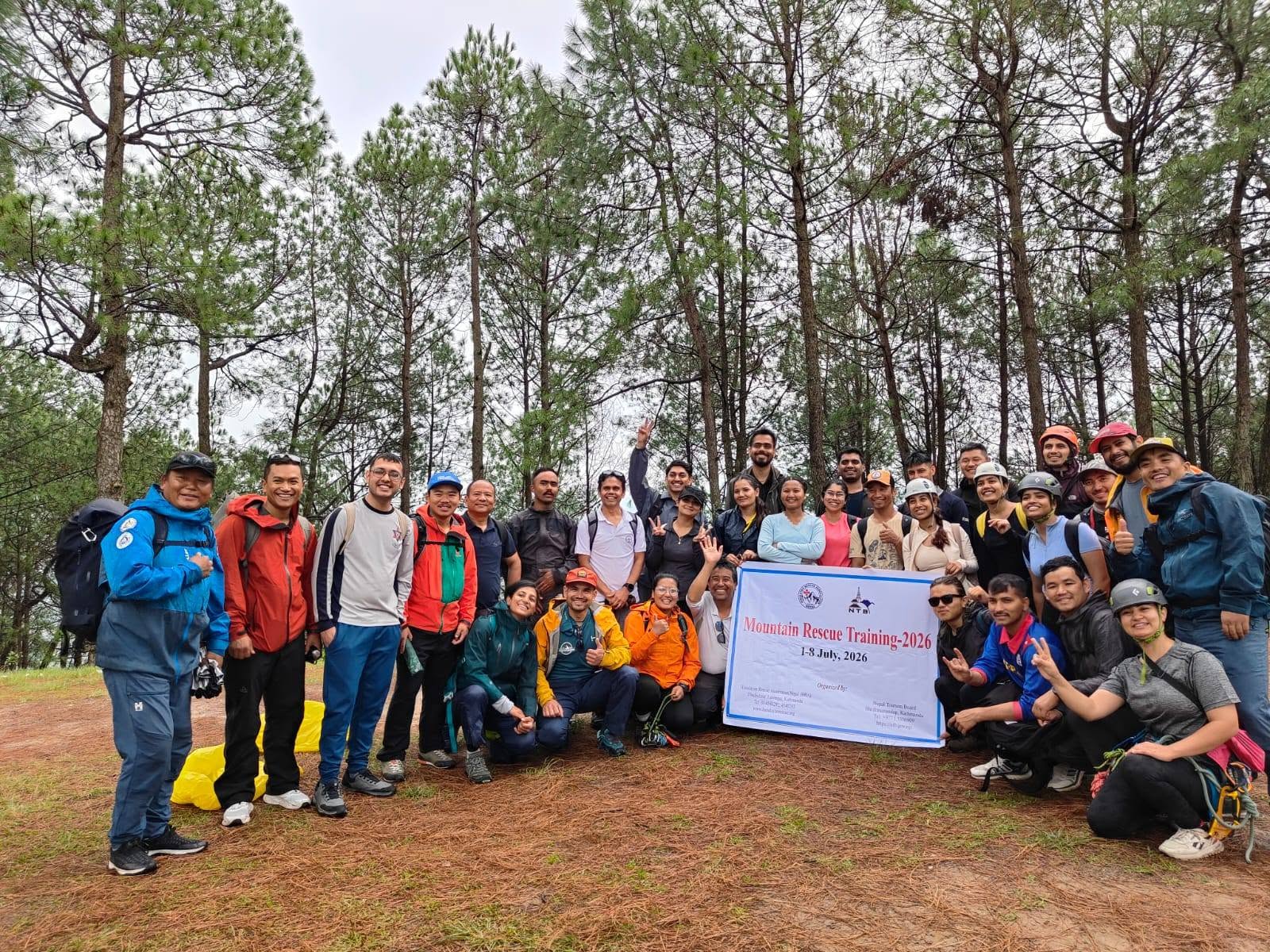
The Himalayan Rescue Association Nepal (HRA), in collaboration with the Nepal Tourism Board (NTB), has successfully completed the Mountain Rescue Training 2026, an intensive eight-day program designed to strengthen Nepal's mountain rescue capacity and improve safety standards across the country's adventure tourism sector.

Held from 1–8 July 2026, the training brought together 25 participants, including doctors, personnel from the Nepal Police Disaster Response & Training Center, trekking guides, and mountain guides. The program focused on developing the knowledge and practical skills required to respond effectively to emergencies in remote mountain environments.
Throughout the course, participants received comprehensive instruction in mountain rescue techniques, emergency medical response, rope rescue systems, casualty evacuation, incident management, wilderness first aid, and the recognition and management of altitude-related illnesses. The hands-on training was designed to prepare rescue personnel and mountain professionals for the unique challenges of operating in Nepal's high-altitude terrain.

The training was led by experienced instructors, including IFMGA-certified mountain guides from the Nepal National Mountain Guide Association (NNMGA) and doctor instructors from the Mountain Medicine Society of Nepal (MMSN). By combining internationally recognized mountain rescue techniques with specialized wilderness medicine and high-altitude healthcare, the program equipped participants with essential skills to improve rescue operations and emergency response in the Himalayas.
As Nepal continues to welcome thousands of trekkers and climbers each year, strengthening the country's mountain rescue system remains a key priority for ensuring visitor safety and promoting sustainable adventure tourism. Training programs such as this play a vital role in developing skilled rescue professionals, enhancing inter-agency coordination, and improving emergency preparedness in remote mountain regions.

The Himalayan Rescue Association Nepal expressed its sincere appreciation to all participants, instructors, the Nepal Tourism Board, the Nepal National Mountain Guide Association, the Mountain Medicine Society of Nepal, and everyone who contributed to the successful completion of the program. HRA reaffirmed its commitment to building a stronger mountain rescue network and helping make Nepal's mountains safer for both domestic and international adventurers.