The Nepal Tourism Board (NTB), the United Nations Development Programme (UNDP) Nepal, and the Mountain Guide Association of Nepal (MOGAN) are set to organize a Digital Content Creation Training program for licensed mountain guides, mountain leaders, and trekking guides.
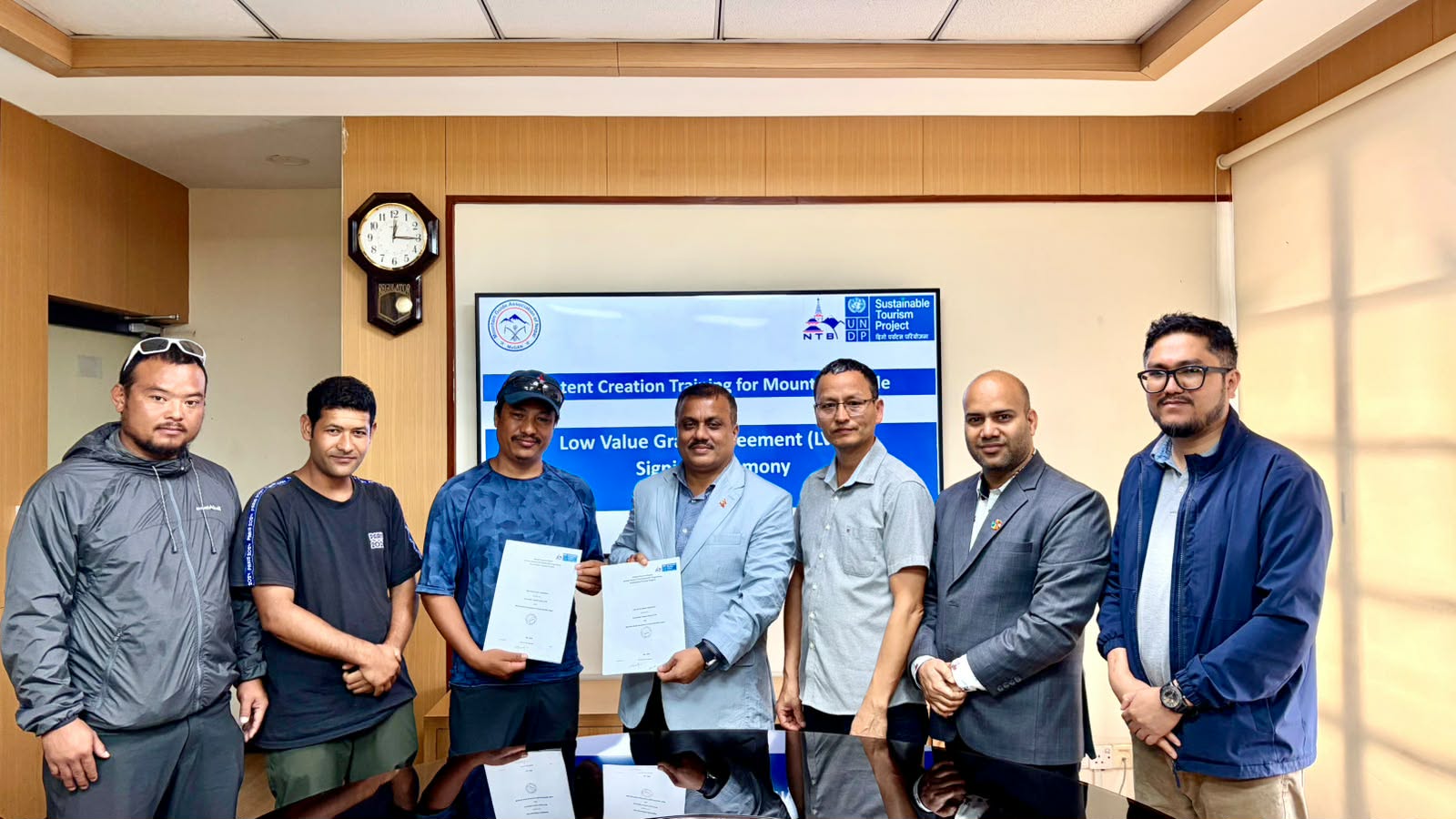
The training will be conducted under the Sustainable Tourism Project (STP), a joint initiative of NTB and UNDP Nepal. To formalize the collaboration, STP and MOGAN signed a Low Value Grant Agreement (LVGA) on Friday.
According to MOGAN, the first phase of the training will take place from July 29 to 31, 2026 (Shrawan 13–15, 2083 BS) at the Nepal Tourism Board Hall in Kathmandu. The dates for the second phase will be announced later. The application deadline is July 27, 2026 (Shrawan 11, 2083 BS).
The three-day (18-hour) hands-on training will benefit 50 licensed mountain guides, mountain leaders, and trekking guides. Participants will receive practical instruction in scriptwriting, digital storytelling, photography, videography, video editing, on-camera presentation, voice-over techniques, and social media management.
Eligible applicants include Nepali citizens holding an NMA Book Holder Mountain Guide certification, a UIMLA Leader Carnet, or a valid trekking guide license. Applicants must have access to a smartphone or other equipment capable of producing video content and must commit to attending the training throughout its duration.
Priority will be given to applicants working in the Sustainable Tourism Project's target trekking areas, including the Api Saipal, Manaslu, and Kanchenjunga trekking regions. Women, youth, Indigenous communities, Dalits, persons with disabilities, and other marginalized groups are also strongly encouraged to apply.
The initiative is expected to strengthen the international visibility of Nepal's trekking destinations through authentic digital storytelling by professional guides. It also aims to attract more domestic and international visitors, promote community-based tourism, create local employment and income opportunities, and contribute to the country's sustainable tourism development.